DynamoDB PartiQL
Running standard relational queries against a distributed NoSQL engine is the ultimate paradox, bro! But Stephane Maarek's hands-on lab shows that PartiQL is the perfect bridge for engineers who spent years mastering traditional relational syntax, allowing them to write SELECT, INSERT, UPDATE, and DELETE commands directly inside the DynamoDB domain.
But don't let the SQL coat of paint fool you, chief. Beneath the syntax, DynamoDB is still 100% NoSQL. It doesn't change your partition constraints, it doesn't merge data across tables, and it still bills you for RCUs and WCUs exactly the same way!
🛠️ Step-by-Step PartiQL Operation Hands On
1. Simple Table Scans & Scoped Queries
- The Monolithic Table Scan: When you execute a broad
SELECTwithout a primary key check, the background compiler translates it straight into a high-overhead nativeScanoperation, bro:
-- ⚠️ WARNING: This scans every partition drive, burning through RCUs!
SELECT * FROM "users";
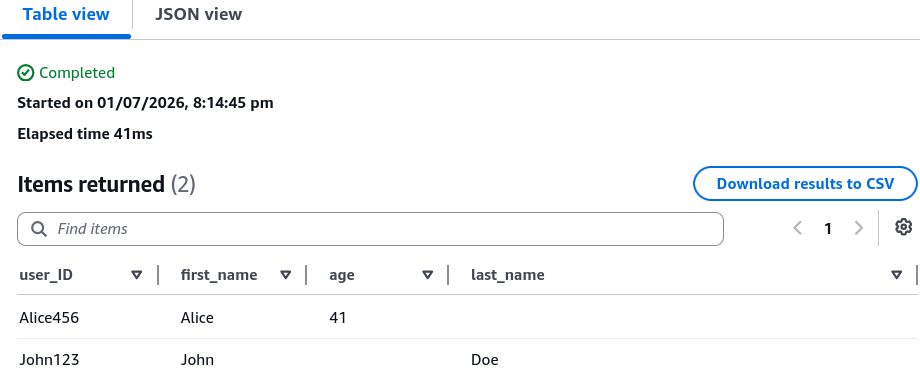
- The Scoped Index Query: To ensure your statement compiles into an efficient low-level
Queryinstead of a resource-draining scan, you must explicitly pass your Primary Key equality variables inside theWHEREclause, chief:
-- 🟢 EFFICIENT: Translates to a native targeted Query lookup
SELECT * FROM "demo_indexes"
WHERE "user_id" = '123' AND "game_timestamp" = '2026-07-01';
2. Targeting Secondary Indexes Natively
One of the slickest features Stephane spotlighted is using PartiQL to scan or query an index. The syntax requires dot-notation combined with individual double-quotes to clear special characters, bro:
-- 🔀 Querying a Global Secondary Index (GSI) via PartiQL
SELECT * FROM "demo_indexes"."game_id_index"
WHERE "game_id" = '456';
3. Mutating Items with SQL Syntax (INSERT, UPDATE, DELETE)
You can handle all your typical CRUD mutation actions using structured JSON style map block parameters directly inside your values block, chief:
- The Data Injection Statement (
INSERT):
INSERT INTO "Users" VALUE { 'user_ID': 'rendy', 'first_name': 'Rendy' };
- The Specific Field Modifier (
UPDATE):
UPDATE "Users" SET "last_name" = 'Saputra' WHERE "user_ID"='rendy';
- The Target Record Eviction (
DELETE):
DELETE FROM "Users" WHERE "user_ID" = 'rendy';
🚨 The Absolute PartiQL Operational Laws
Make sure you lock these exact operational constraints down for the exam blueprint, bro:
⛔ THE NO-JOIN LAW: Even though you are writing SQL syntax, you are strictly blocked from writing
JOINor native server-side aggregation clauses (likeGROUP BY,SUM,AVG)! If you try to run a multi-table join statement, the PartiQL parsing engine will throw an immediateValidationException / Statement wasn't well formederror block. 📦 THE BATCH INGESTION MATRIX: Just like the native APIs, PartiQL supports grouped transactional batching via theBatchExecuteStatementAPI call (handling up to 25 statements in a single network pass). However, you cannot mix reads and writes inside the same batch. A single batch must be 100% data extractions (SELECT) or 100% data modifications (INSERT/UPDATE/DELETE).
📊 Operational Telemetry IAM Controls
When you move your application logic over to PartiQL statements, your calling microservice IAM roles require specialized, fine-grained permission tags to execute the queries:
PartiQL Action ──► IAM Policy Evaluation ──► Underlying API Compilation
   SELECT    ──►  dynamodb:PartiQLSelect  ──► Compiles to native Query / Scan API
   INSERT    ──►  dynamodb:PartiQLInsert  ──► Compiles to native PutItem API
   UPDATE    ──►  dynamodb:PartiQLUpdate  ──► Compiles to native UpdateItem API
   DELETE    ──►  dynamodb:PartiQLDelete  ──► Compiles to native DeleteItem API
Exam Tips
- The SQL Translation Trap: If an exam prompt introduces a team of relational database developers who want to migrate to a serverless architecture but are struggling to adapt to DynamoDB's expression-attribute JSON API syntax, look for PartiQL as the optimal transition bridge.
- The Unwanted Scan Defense Guardrail: If a question asks how a security administrator can prevent developers from accidentally running dangerous, high-cost full table scans using PartiQL
SELECTstatements, look for the IAM condition key check. You attach a hardDenystatement to the developer policy specifyingdynamodb:FullTableScan = true, which forces the engine to block any statement that forgets to supply an indexed primary key inside itsWHEREclause.