CDK - Constructs
Understanding the matrix of CDK Constructs is how you transition from just copy-pasting code templates to architecting massive, secure cloud blueprints like an absolute legend! 🔮🧱
Constructs are the fundamental building blocks of the CDK. They encapsulate everything the engine needs to synthesize your final declarative CloudFormation stacks. Whether you need to deploy a standalone storage bucket or orchestrate a massive, auto-scaling container cluster wrapped in dynamic security zones, you use constructs to package that logic up cleanly.
Key Takeaways
Let’s unpack the three explicit layers of CDK Constructs and check out how the community-driven Construct Hub ties it all together.
🧱 The Three Levels of Construct Abstraction
AWS partitions the Construct Library into three distinct layers, moving from raw granular control up to elite, ready-to-roll architectural blueprints:
🔎 Layer 1: CFN Resources (The Direct Mapping)
These are the lowest-level primitives in the CDK universe. They represent an exact, 1:1 mirror image of raw CloudFormation resources.
- The Marker: **You know it's an L1 construct the exact microsecond you see it prefixed with
Cfn**(e.g.,new s3.CfnBucket()). - The Mechanics: It strips out all the coding magic. You must manually declare every single mandatory property and handle boilerplate configurations exactly like you would in a classic YAML or JSON text template. It's the ultimate migration tool if you just want to translate old templates into code line-for-line without changing how they behave.

🧠 Layer 2: AWS Intent (The Smart Default Engine)
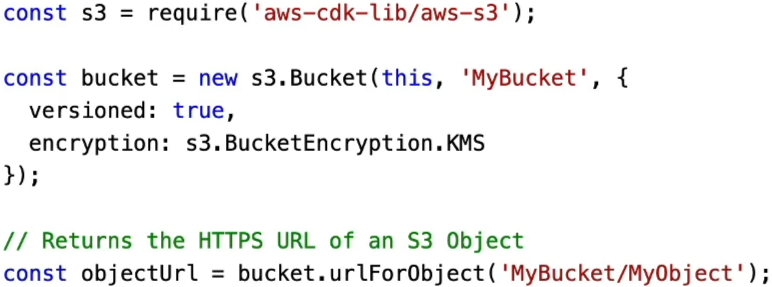
This is where the real power of object-oriented infrastructure kicks in. L2 constructs represent AWS resources but operate at a higher level of intent (e.g., new s3.Bucket()).
- Convenient Defaults: AWS engineers have pre-baked these components with highly secure, production-ready defaults and boilerplates. You don't have to guess or manually write out obscure properties just to turn on versioning or KMS database encryption.
- Programmatic Shorthand Methods: L2 constructs expose powerful, high-level helper functions. Instead of wrestling with complex arrays to set up data storage expiration rules, you simply execute a clean line like
bucket.addLifecycleRule(), and the CDK handles all the raw underlying CloudFormation plumbing automatically!
🚀 Layer 3: Patterns (The Full Architecture Stack)
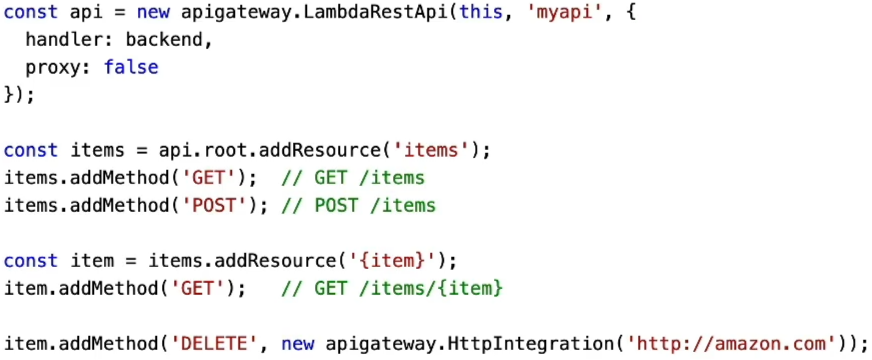
These are high-level compositional structures called Patterns. Instead of representing a single isolated service, an L3 construct maps a collection of multiple related resources engineered to achieve a specific systemic task.
- The Rest API Example: Declaring a
LambdaRestAPIpattern automatically provisions the Amazon API Gateway endpoint infrastructure, hooks up the target backend Lambda functions, maps the HTTP method routes, and binds the execution integrations with zero manual friction. - The Container Fleet Example: Using an ECS pattern like an
ApplicationLoadBalancedFargateServicecan be a total nightmare to write out in raw YAML. But with the CDK, you just fill in the basic compute sizing blanks. The pattern dynamically deploys an Application Load Balancer, provisions a secure ECS cluster, hooks up the listener routing rules, and configures the target security groups automatically on the fly, bro!
🌐 Scaling Out with Construct Hub
If the native AWS library isn't fast enough for your deployment velocity, you can tap straight into the Construct Hub.
The Construct Hub acts as a massive open-source registry that aggregates cloud constructs created not just by official AWS teams, but also by major third-party vendors and the global open-source CDK developer community. If your team needs to rapidly deploy complex, standardized infrastructure compliance rings (like pre-audited Datadog monitoring setups, specific Cloudflare DNS routing loops, or specialized security perimeters), you can pull down a pre-baked L3 pattern straight from the Hub to accelerate your pipeline velocity to the moon.
Exam Tips
- The Rapid Infrastructure Modernization Scenario: If an exam prompt introduces a DevOps team that wants to move their legacy infrastructure entirely into the AWS CDK, but demands a zero-risk approach that exactly duplicates their existing CloudFormation templates without introducing any new defaults or behavioral changes—look straight for the answer that uses Layer 1 CFN Resources (
CfnBucket,CfnQueue). - The Least Privilege Automation Choice: If a scenario presents a developer who needs to rapidly stitch a serverless API together, and wants to avoid manually writing out dozens of verbose permission blocks while ensuring the system maintains strict secure defaults—choose the answer that utilizes L2 or L3 constructs, leveraging built-in shorthand methods like
.addLifecycleRule()or.grantReadWrite()to let the code engine dynamically compute the secure boilerplate behind the scenes.